Brief
The Social Lab project aimed to design solutions that can enable individuals within California College of the Arts (CCA) to opt for zero waste practices and ultimately reduce their environmental footprint.
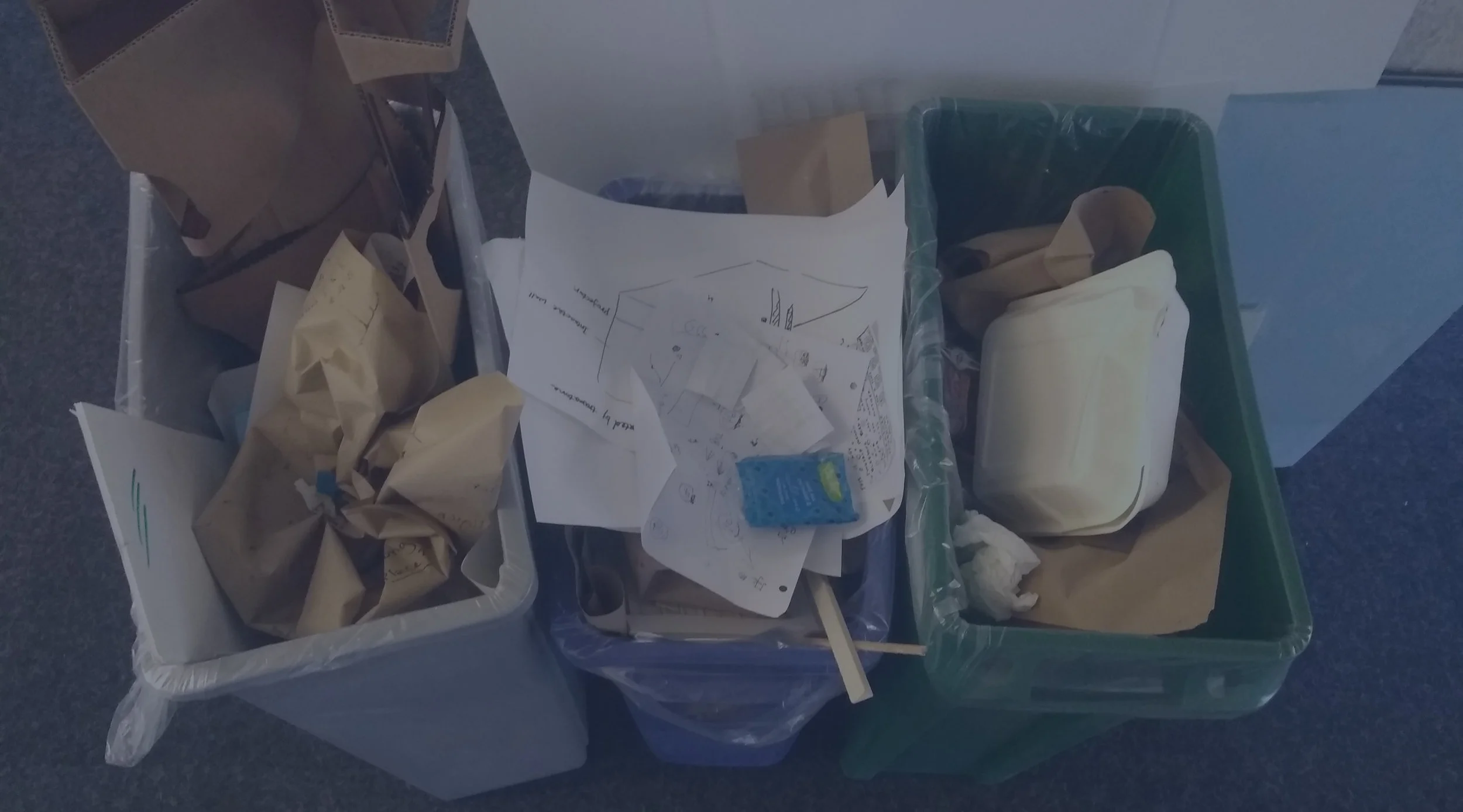
The Social Lab project aimed to design solutions that can enable individuals within California College of the Arts (CCA) to opt for zero waste practices and ultimately reduce their environmental footprint.
20.95 - a team of three UX designers with a shared passion towards designing for earth’s better tomorrow. Why 20.95? 20.95 is the percentage of oxygen in the atmosphere naturally maintained at equilibrium - without which life on earth would cease to exist.


We partnered with David Meckel, Director of Research and Planning at California College of the Arts (CCA).
An ordinance passed by the Board of Supervisors in June of 2009, requires everyone in San Francisco to separate recyclables, compostables and landfill-bound trash.
The city has a goal to become a zero-waste city by the year 2020 and in order to achieve that, CCA and other institutions need to align their goals with that of the city.


From our research, we noticed specific patterns and learned that small nudges, motivation and most importantly knowledge are some factors that can bring about behavioral change.
Education at CCA prepares students for their careers but does not provide enough knowledge to equip them to make more sustainable choices. We identified that there is a need for CCA to take the initiative to educate the next generation of design leaders on sustainability best practices.
Through various iterative probes and research, we identified some leverage points within CCA ’s system.
We realized that making structural changes or creating strict policies will only generate indifference from students rather than if students genuinely felt the need to contribute to a larger community goal.
To attain the highest impact, we focused on changing behaviors of the students through knowledge and guidance instead of just changing structures to generate awareness and ultimately increased intrinsic motivation and lifestyle changes.
How might we enable the CCA community to support individuals to adopt zero-waste practices on campus?
Based on our goal, we brainstormed as a group and then with our partner David to filter out ideas with the highest potential in terms of feasibility, impact, usability and longevity.


“The game was really fun and interactive and it was a nice icebreaker as I am new to this place.”


‘Sort it well’ is a game to be played by new CCA students at orientation. The game is designed to teach students about different kinds of waste and how to segregate them. It also briefly focuses on why waste segregation is essential in their own lives and at CCA.
‘Sort it well’ digital version, is a game to be played by CCA students during their journey at the college. This digital game can help students learn remotely. The game is designed to educate students about waste segregation, CCA and the city’s expectations and also about why is waste segregation essential.
California College of the Arts as a community prides itself in having one of the most sustainable premises in San Francisco. This could be better represented on its digital platform. There is an opportunity to empower people within this community to adopt zero- waste practices by sharing the required knowledge and resources with them.
The ‘Each 1 Teach 2’ initiative encourages students and staff to educate each other about best zero-waste practices. Through this program, individuals within the CCA community can empower themselves and others to advocate for zero-waste practices and lead by example.


We would encourage CCA to measure impact through the:
Through our experiments and our conversations, we were successful in influencing and inspiring those around us to be more mindful of their behavior. CCA residencies are already using the physical version of the game as one of their orientation activity.
Social Lab project gave me an opportunity to dive deep into every phase of the design process like user research, prototyping, and usability testing to understand and design solutions for a problem that matters to me as well as to the world. During the project, I learned to design for complex systems by understanding the thoughts & mindset of the related actors. I also got an opportunity to learn and practice new tools and techniques to establish an effective communication system within the team to define team's direction and enhance team's productivity.